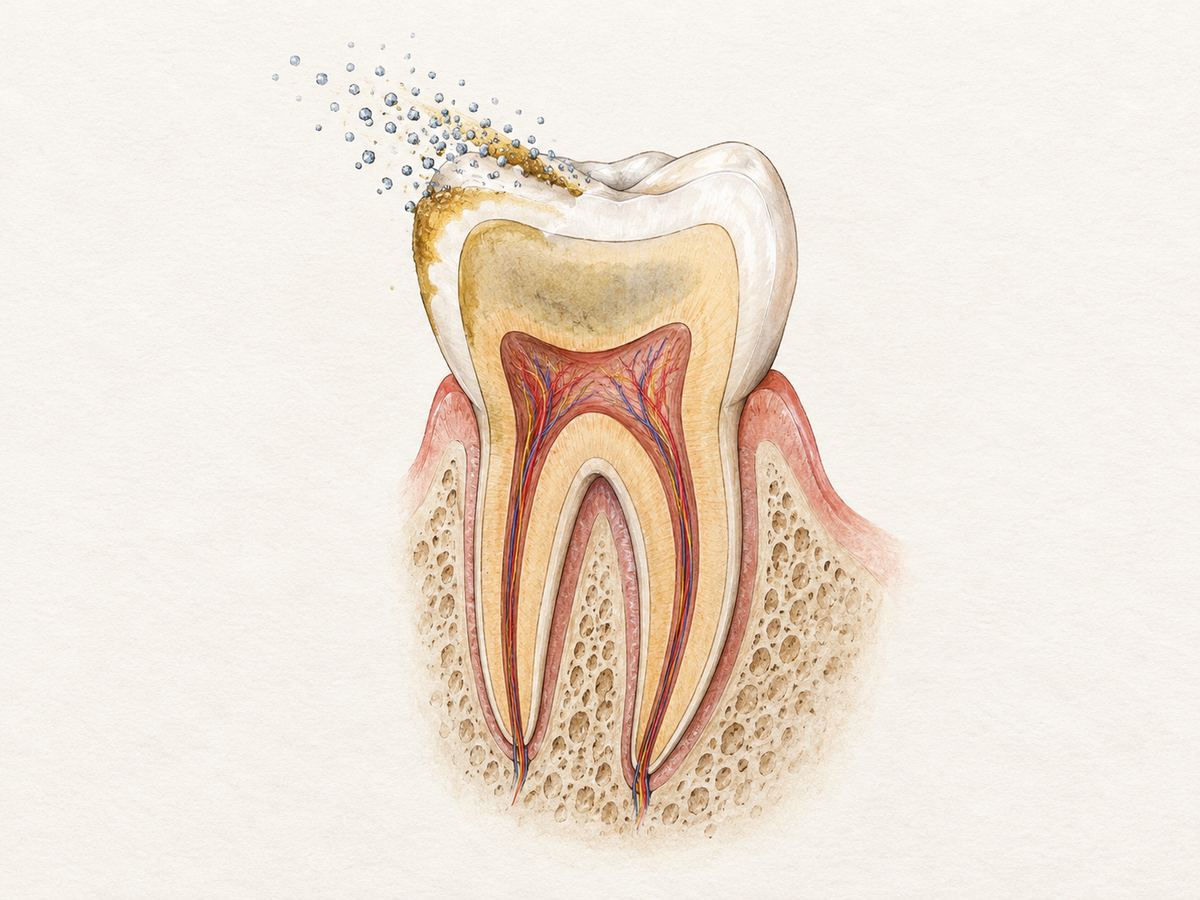













Tus dentaduras postizas son una inversión en tu sonrisa, comodidad y capacidad para disfrutar de la comida. Pero, al igual que los dientes naturales, necesitan una limpieza constante para mantenerse frescas, sin manchas y seguras. Aunque las dentaduras postizas en sí no pueden desarrollar caries, la misma pegajosa biopelícula (placa dental) que se forma en los dientes naturales se acumula en sus superficies, y si no se controla, puede provocar mal aliento, irritación de las encías e incluso infecciones graves como estomatitis protésica. En los adultos mayores o en aquellas personas con el sistema inmunitario comprometido, las dentaduras postizas mal limpiadas se han relacionado con la neumonía por aspiración, lo que hace que el cuidado diario sea una verdadera prioridad para la salud.
resumen: Una rutina diaria de limpieza de dos minutos —cepillado sobre un lavabo acolchado, un remojo profundo semanal y mantener la dentadura postiza húmeda durante la noche— previene manchas, olores y acumulación de bacterias. Evita la pasta de dientes abrasiva y el agua caliente. Invierte en un limpiador específico para dentaduras postizas y un cepillo suave. Tu dentista es tu aliado: las limpiezas profesionales anuales ayudan a que tu dentadura postiza mantenga el mejor ajuste y funcionamiento.

Reúne Tus Materiales — Lo Que Realmente Necesitas
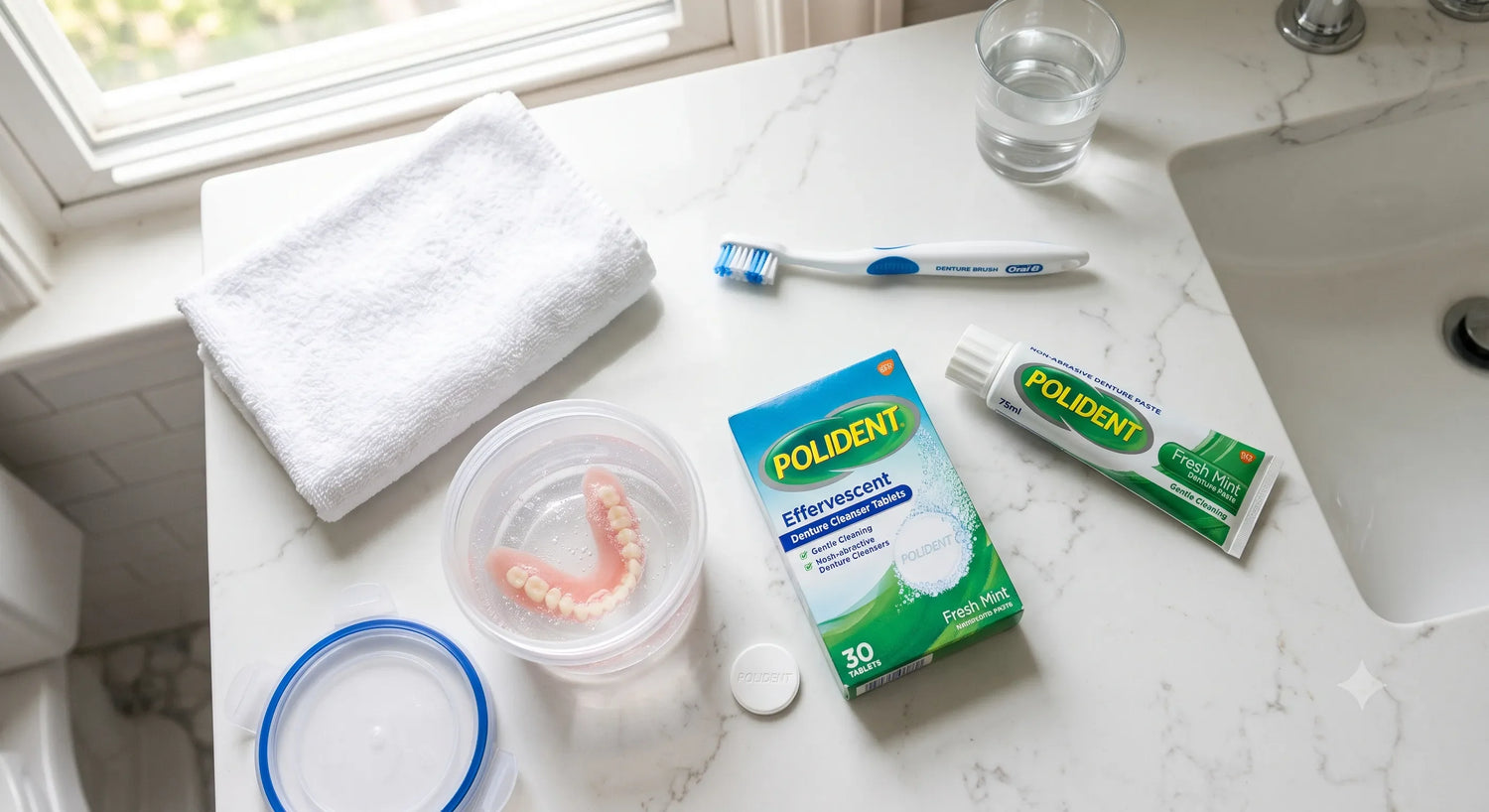
Empezar es más sencillo de lo que piensas. Todo kit eficaz para el cuidado de las dentaduras postizas se basa en tres elementos imprescindibles:
- Una dentadura con cerdas suaves — no es un cepillo de dientes normal. Sus cerdas están diseñadas específicamente para limpiar superficies irregulares sin rayarlas.
- Un limpiador no abrasivo para dentaduras postizas — pasta, gel o líquido etiquetado “para dentaduras postizas”. La pasta dental común contiene abrasivos que crean microarañazos en el acrílico, convirtiéndolo en una trampa para bacterias y manchas.
- Un recipiente para remojar o una taza limpia lo bastante profunda como para sumergir completamente su dentadura postiza.
¿Por qué no hay pasta de dientes? Incluso la pasta dental blanqueadora más suave actúa como papel de lija sobre el material de la dentadura postiza. Esos arañazos invisibles se convierten rápidamente en focos de bacterias y manchas difíciles de quitar. La Asociación Dental Americana aconseja explícitamente usar un limpiador para dentaduras no abrasivo, no pasta de dientes.
Pasos de limpieza diaria: tu renovación de 2 minutos
Una vez que tengas tu kit, una rutina rápida por la mañana o por la noche mantiene tus dentaduras postizas con una sensación de limpieza y un olor neutro. Piénsalo como un spa para tu sonrisa.
- Enjuague después de cada comida. Retire sus dentaduras postizas y enjuáguelas con agua fría o tibia para eliminar las partículas de comida sueltas. (Hágalo sobre un lavabo con una toalla doblada o un recipiente con agua; si se le resbalan, pueden romperse y causar un gasto importante.)
- Cepille suavemente todas las superficies. Humedezca su cepillo para dentaduras postizas y aplique un limpiador para dentaduras (pasta o líquido). Cepille las superficies externas, las superficies internas y las zonas que están en contacto con las encías, usando pequeños movimientos circulares. Evite frotar con fuerza: está eliminando la biopelícula, no usando fuerza bruta.
- No olvides los herrajes. Si tienes un prótesis dental parcial con cierres metálicos, cepíllalos con cuidado también, pero limítate a usar agua y jabón o un limpiador aprobado para componentes metálicos. Los químicos agresivos pueden corroer la estructura metálica.
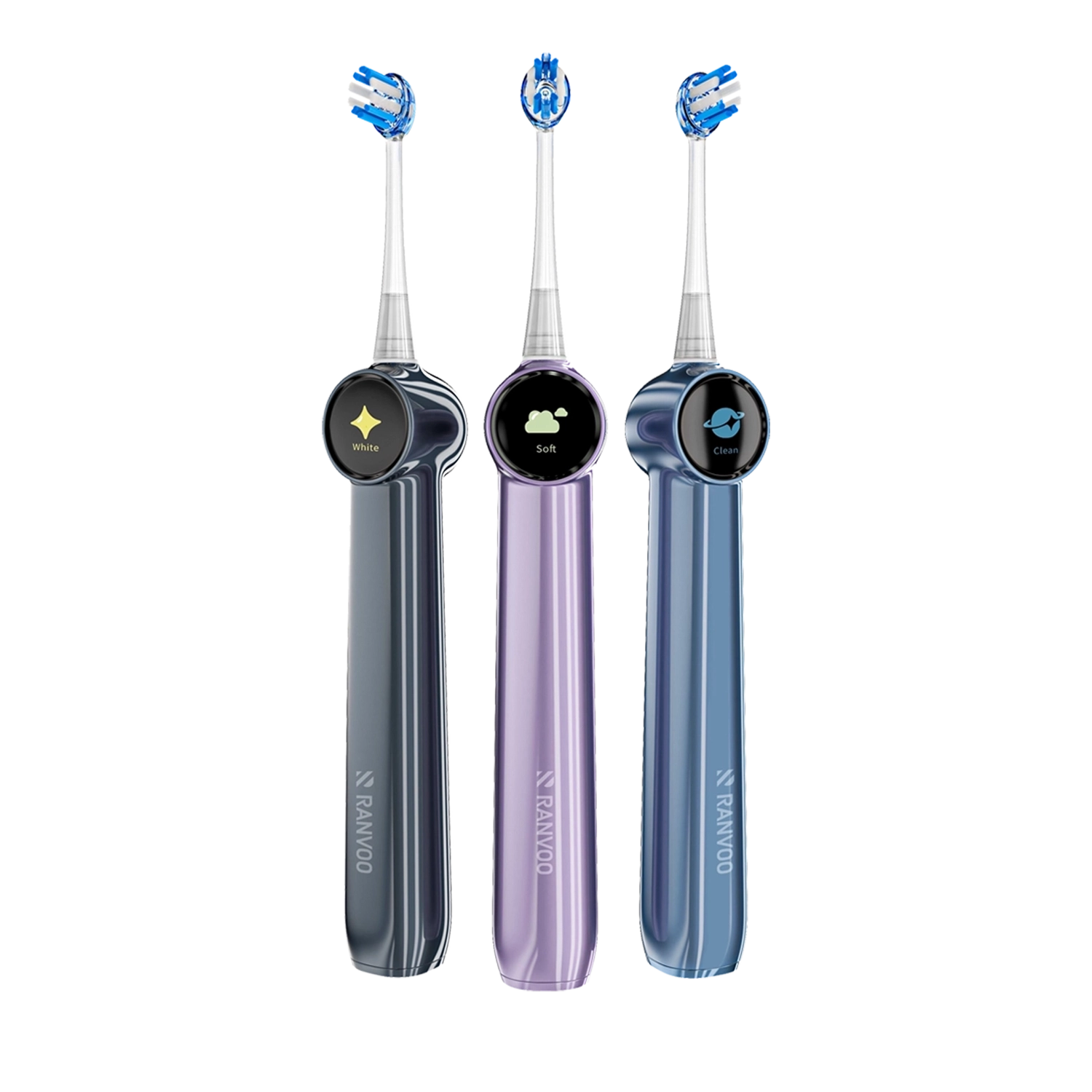
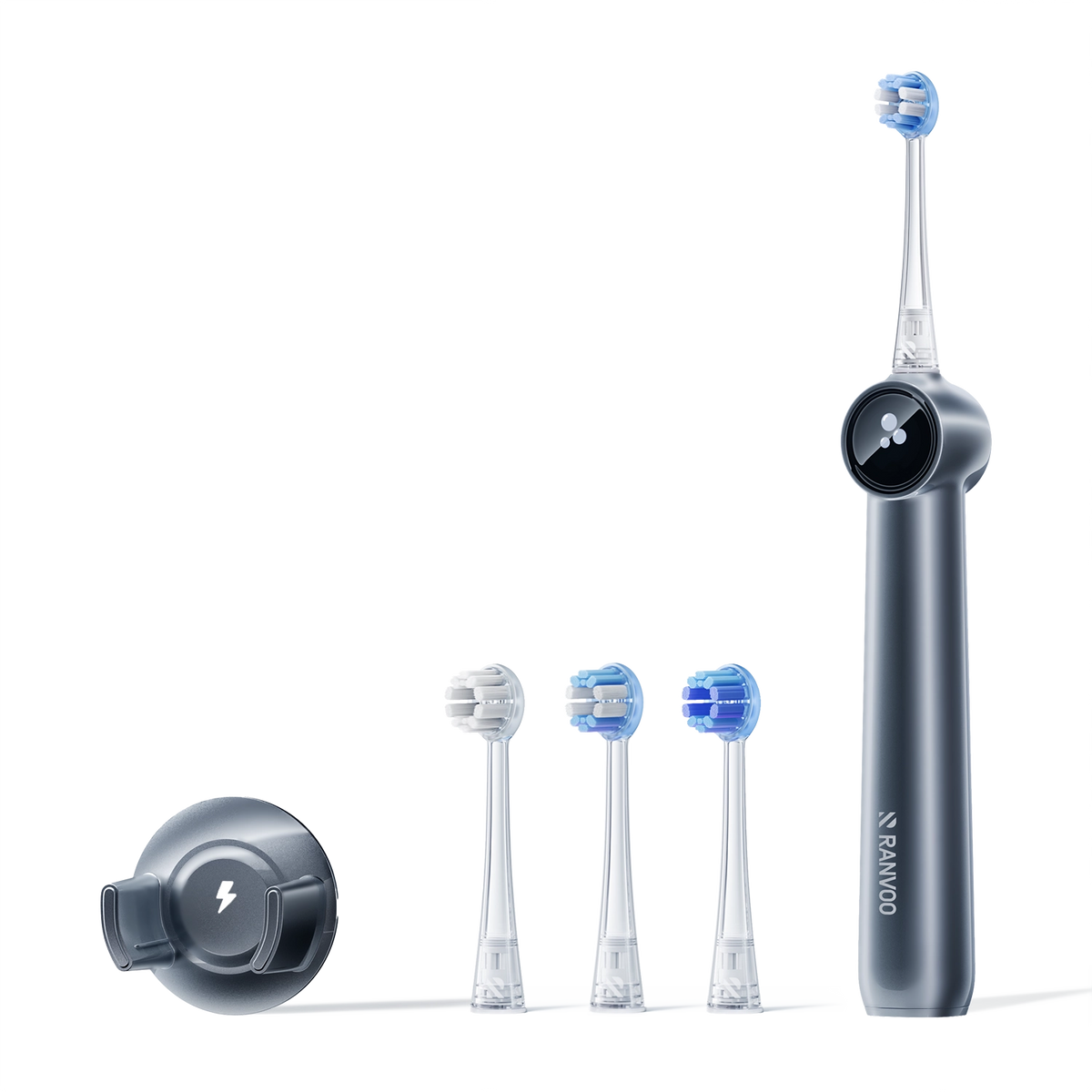
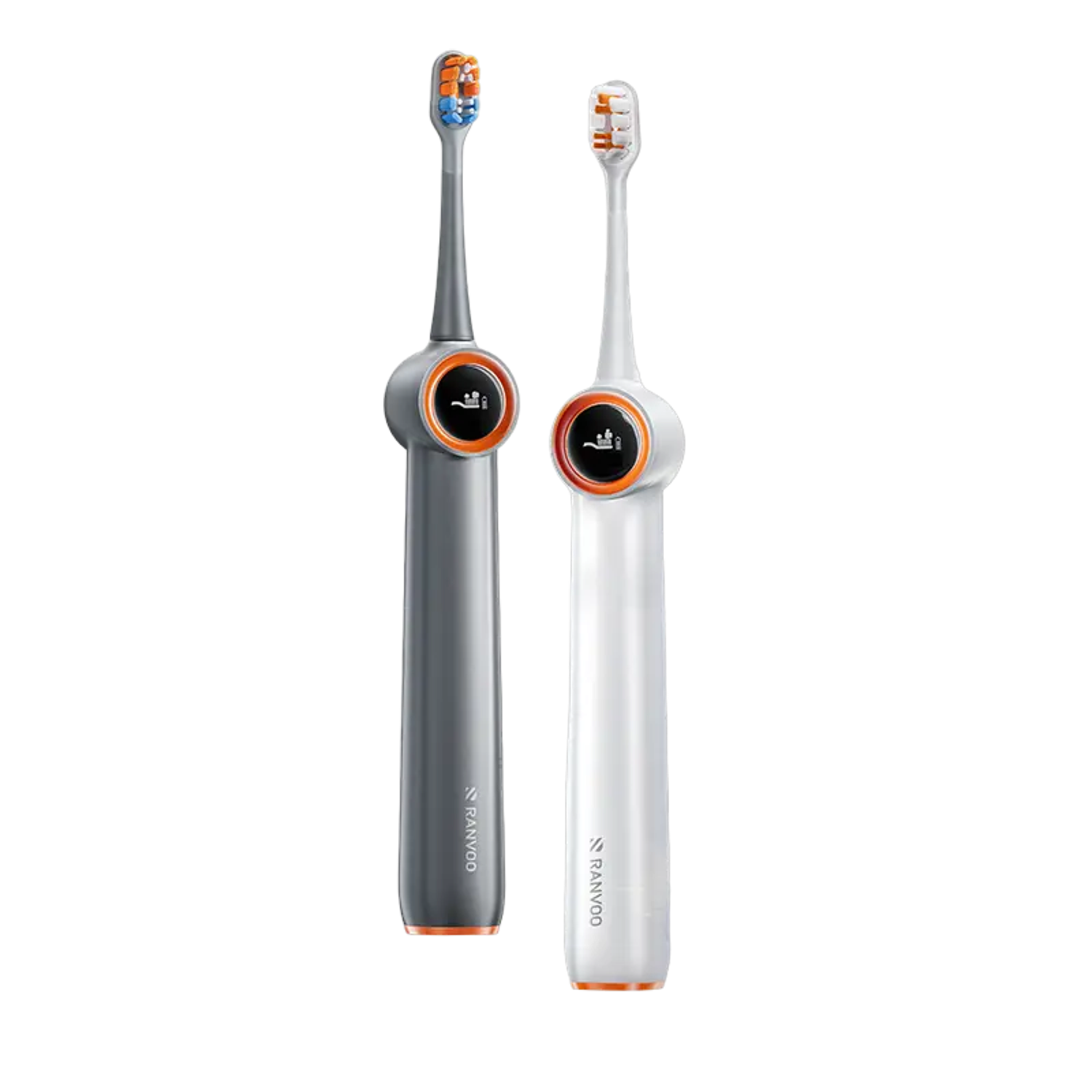
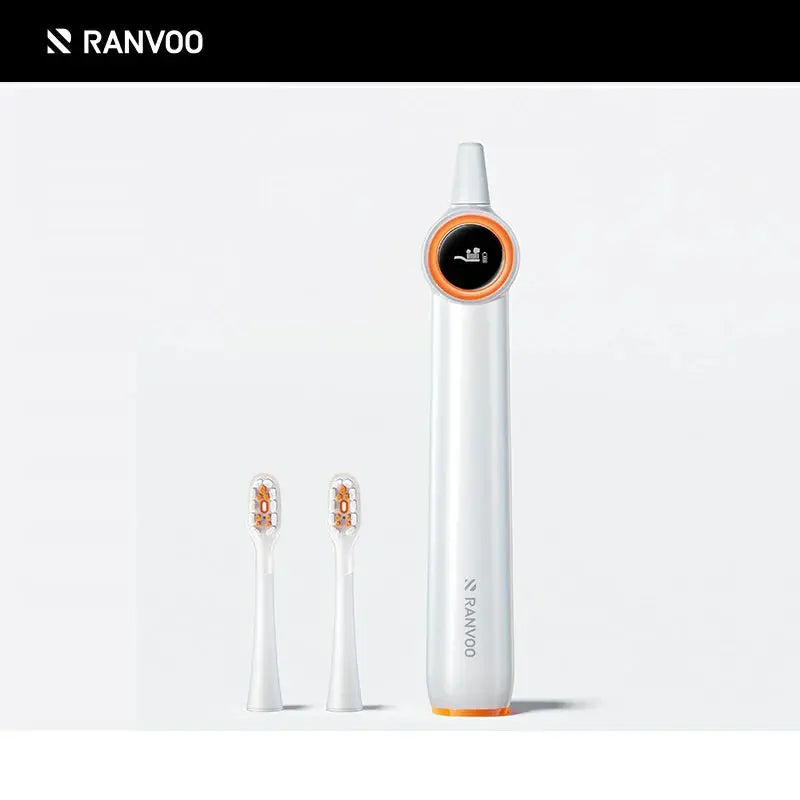
- Límpiate la boca tú mismo. Después de quitarse la dentadura postiza, use un cepillo de dientes suave para limpiar delicadamente las encías, la lengua y el paladar. Esto elimina las bacterias y mejora la circulación. A cepillo de dientes eléctrico con un modo delicado es una excelente herramienta para esto: masajea los tejidos blandos sin abrasión.
- Enjuaga y coloca. Enjuague bien su dentadura postiza antes de volver a ponérsela, especialmente si utilizó alguna pasta limpiadora.
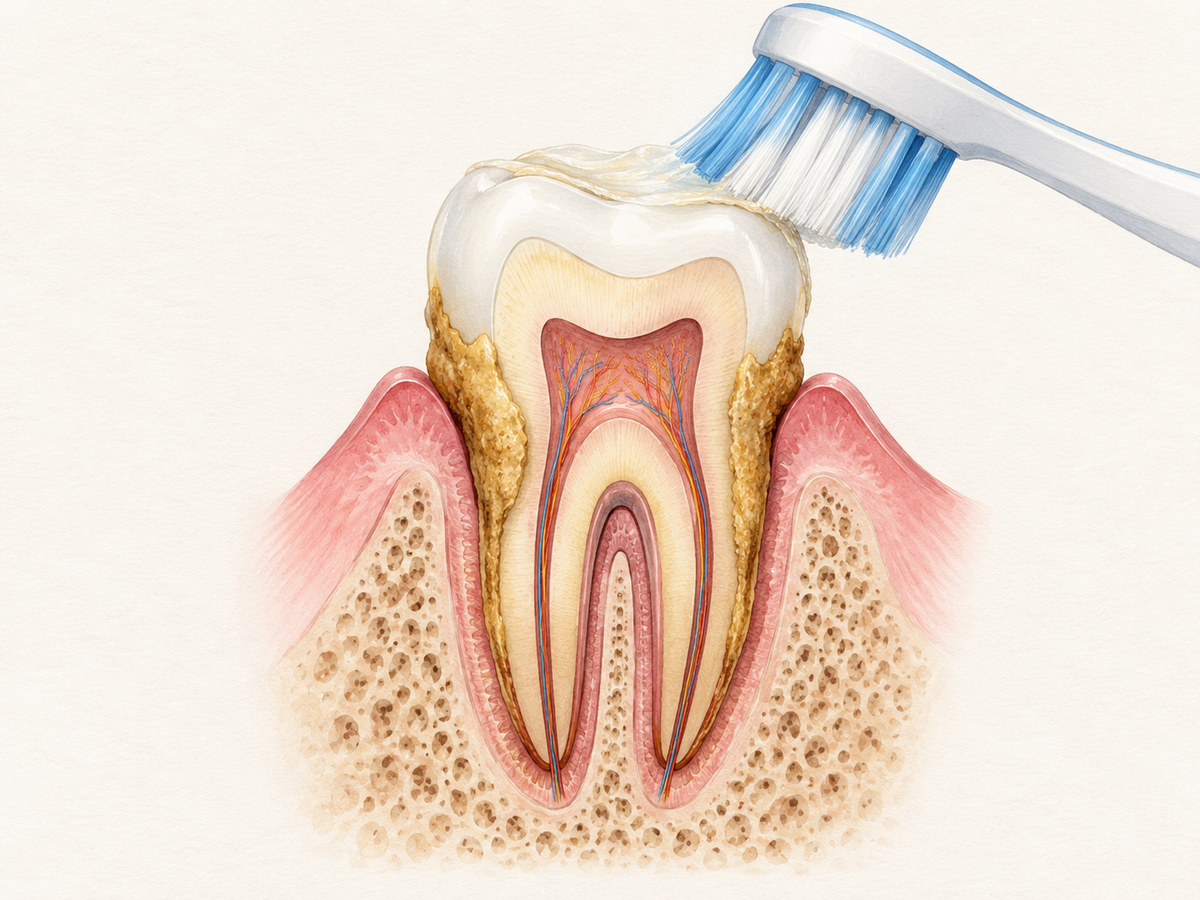
Si tiene dentaduras postizas parciales, recuerde que sus dientes naturales restantes necesitan atención adicional. Usar un cepillo de dientes eléctrico aplicar en esos dientes ayuda a eliminar la placa de manera más eficaz, previniendo la caries y la enfermedad de las encías que podrían aflojar los dientes de soporte de tu dentadura postiza.
Limpieza profunda semanal: el remojo nocturno que borra años
Incluso con un cepillado minucioso, una fina capa de biopelícula puede asentarse en poros diminutos y grietas de difícil acceso. Ahí es donde una vez a la semana remojo profundo llega — elimina las manchas incrustadas y mata las bacterias mientras duermes.
Opción 1: Tabletas efervescentes limpiadoras para dentaduras postizas. Coloca una tableta en tu recipiente de remojo lleno de agua fría y luego coloca tu dentadura postiza dentro. A 2023 revisión sistemática y metaanálisis confirmó que combinar el cepillado con tabletas efervescentes reduce significativamente las bacterias y la levadura en comparación con solo el cepillado. La mayoría de las tabletas usan peróxidos alcalinos`, que hacen efervescencia y liberan oxígeno para descomponer los residuos sin dañar el acrílico.
Opción 2: Solución diluida de vinagre blanco. Mezcla partes iguales de vinagre blanco y agua fría y deja tus dentaduras postizas en remojo durante 20–30 minutos. La acidez suave del vinagre disuelve la acumulación de minerales y elimina muchos microbios. Solo asegúrate de enjuagarlas bien después, ya que una exposición prolongada puede volver la superficie áspera lentamente. Este método es seguro para dentaduras completas, pero si tienes una prótesis parcial con estructura metálica, usa tabletas para dentaduras postizas: los ácidos pueden deslustrar el metal.

Importante: Nunca uses lejía para limpiezas profundas de rutina. Los baños breves con hipoclorito de sodio diluido (0.5%) a veces se usan bajo supervisión profesional, pero la lejía doméstica está demasiado concentrada y puede decolorar y debilitar permanentemente tu dentadura postiza.
Cuidado nocturno: mantenga sus dentaduras postizas húmedas
Al igual que la piel, el acrílico de las dentaduras postizas puede deformarse si se deja secar. Por eso, la regla número uno para guardarlas durante la noche es siempre mantenlos húmedos.
Coloque su dentadura limpia en un vaso para dentaduras lleno de agua fresca natural o de una solución de remojo suave (como un limpiador para dentaduras diluido para uso nocturno, si lo recomienda el fabricante). Este sencillo hábito preserva su forma y garantiza un ajuste cómodo cada mañana. Como la Clínica Mayo aconseja, las dentaduras postizas deben remojarse durante la noche para evitar que se deformen. Por la mañana, enjuáguelas bien antes de volver a usarlas.
Nunca envuelva las dentaduras postizas secas en un pañuelo ni las deje en la mesita de noche: pueden agrietarse o deformarse en cuestión de horas.
Productos Seguros: Usa Esto, Evita Aquello
La claridad reduce la ansiedad. Aquí tienes tu guía rápida de exactamente lo que toca tu dentadura postiza, y lo que no debe tocarla.
| Seguro de usar | Nunca uses |
|---|---|
| Pasta, gel o crema específicos para dentaduras (no abrasivos) | Pasta de dientes regular (de cualquier tipo) |
| Comprimidos limpiadores efervescentes (peróxido alcalino) | Lejía doméstica (hipoclorito de sodio) — o cualquier solución más allá del uso profesional de 10 minutos |
| Mild detergent lavavajillas líquido (con enjuague minucioso) | Abrasivos limpiadores de cocina, pastas de bicarbonato de sodio |
| Vinagre blanco diluido (remojo breve, solo para dentaduras postizas completas de acrílico) | El agua caliente o hirviendo deforma el acrílico de forma permanente |
| Adhesivos para dentaduras postizas (sin zinc, en pequeñas cantidades del tamaño de un guisante) | La vaselina u otros “pegamentos” caseros |
| Agua fresca o tibia | Agua caliente |
Adhesivo para dentaduras postizas safety: Cuando use un adhesivo, aplique no más de tres o cuatro pequeñas porciones del tamaño de un guisante en cada dentadura postiza, y retírelo completamente cada día con un cepillo suave. Se recomiendan las fórmulas sin zinc, ya que el exceso de zinc de los adhesivos puede causar problemas neurológicos con el tiempo. Si nota que necesita cada vez más adhesivo, es posible que su dentadura postiza necesite un rebase; consulte a su dentista.
Errores Que Debes Evitar (Probablemente Estés Cometiendo Uno)
Estos son los errores más comunes, y todos ellos tienen solución.
- Exfoliando con demasiada fuerza. No se pueden “frotar hasta quitar” las manchas. Un cepillado demasiado agresivo solo provoca arañazos más profundos. Un cepillado suave y metódico hace más bien que la fuerza.
- Omitir las limpiezas. Incluso un solo día sin hacerlo permite que el biofilm se afiance. Un cepillado rápido toma dos minutos; trátalo como lavarte la cara.
- Usando agua hirviendo. El calor deforma el acrílico, arruinando el ajuste preciso. Utiliza siempre agua fría o tibia.
- Remojando en lejía durante la noche. la lejía puede volver amarillos los dientes blancos de la dentadura, debilitar el plástico y corroer el metal. Como enfatiza el Colegio Americano de Prostodoncistas, las dentaduras postizas nunca deben colocarse en agua hirviendo ni dejarse en remojo en lejía.
- Descuidando tus encías. Las encías doloridas e inflamadas suelen ser un signo de comida atrapada o de una dentadura postiza mal limpiada. Si sientes molestias en la boca, refuerza tu rutina de cuidado de la mucosa.
- Olvidar el estuche de la dentadura postiza. Al viajar, lleva siempre un estuche resistente con una esponja húmeda o un pequeño compartimento para evitar daños.
Cuándo consultar a un profesional
El cuidado en casa hace la mayor parte del trabajo, pero algunas tareas requieren a un profesional dental. Reserva una cita si notas:
- Manchas persistentes que no responden al remojo ni al cepillado.
- Olor inusual que queda después de una limpieza a fondo.
- Holgura o deslizamiento que los adhesivos no pueden reparar.
- Tejidos enrojecidos, doloridos o sangrantes debajo de su dentadura postiza.
- Visible grietas o astillas.
Un dentista o prostodoncista puede realizar una limpieza ultrasónica para descomponer los depósitos calcificados que ningún cepillo puede eliminar. Directrices basadas en evidencia Recomendamos una limpieza profesional al menos una vez al año para reducir la biopelícula y comprobar el ajuste de sus dentaduras postizas. Considérelo una puesta a punto para su sonrisa, nunca una señal de fracaso.
Al tratar tu dentadura postiza con el mismo cuidado diario que darías a tus dientes naturales —más un poco de atención extra a la humedad y a los productos suaves—, la mantendrás con un aspecto impecable, una sensación segura y protegiendo tu salud general durante muchos años.
Este artículo ha sido revisado por un profesional de la salud bucal para garantizar su exactitud. Su objetivo es proporcionar información educativa general y no debe utilizarse como sustituto de asesoramiento médico, diagnóstico o tratamiento personalizados. Si tiene preguntas o inquietudes sobre su salud bucal, consulte a un dentista, médico u otro profesional de la salud cualificado.