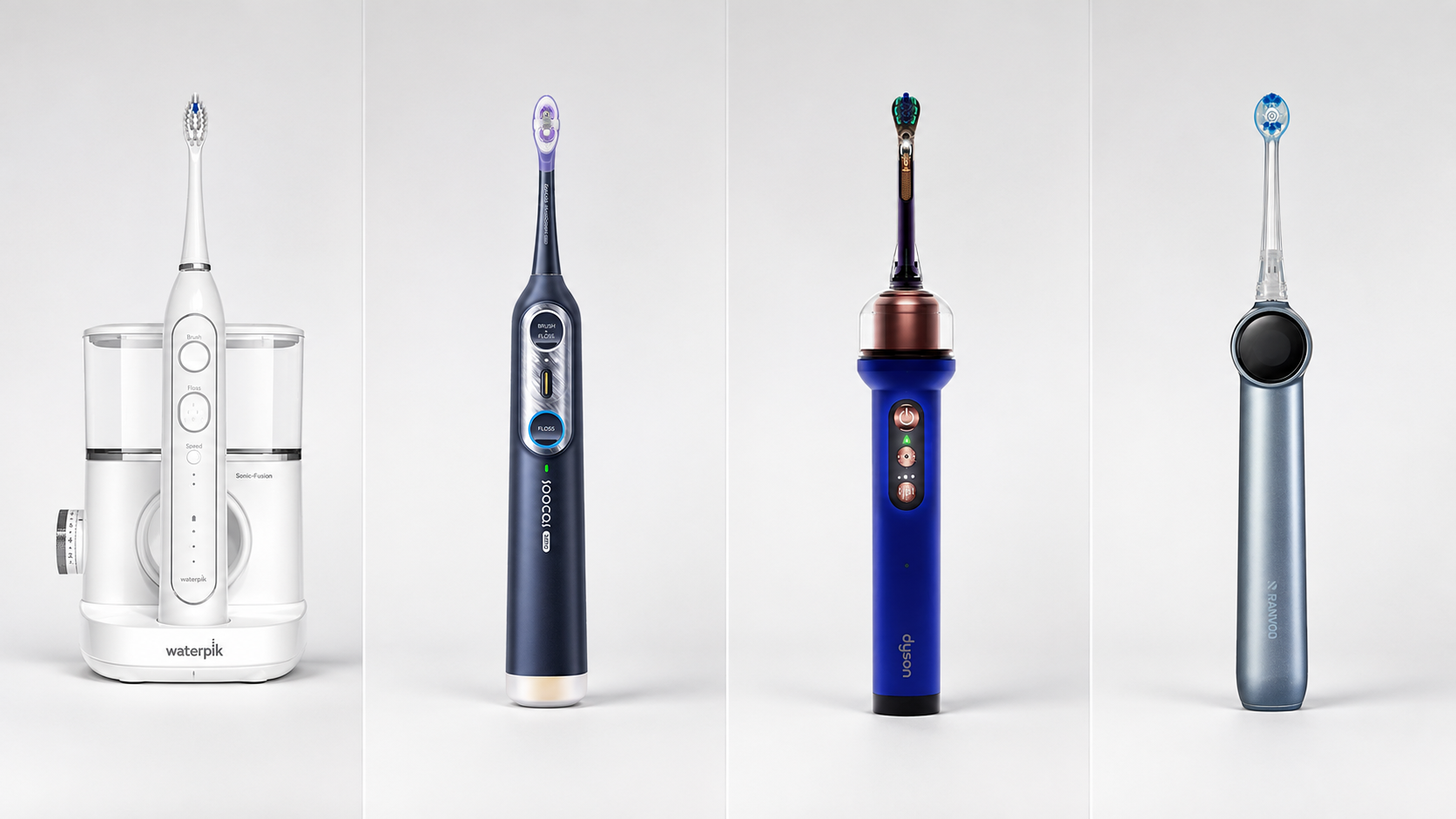








Un cepillo de dientes sónico utiliza vibraciones de alta velocidad para crear una acción fluida dinámica que limpia más allá de donde tocan las cerdas. Elimina la placa, protege las encías y se siente más suave que un cepillo manual, pero elegir uno es más que solo velocidad.
¿Qué es un cepillo de dientes sónico?
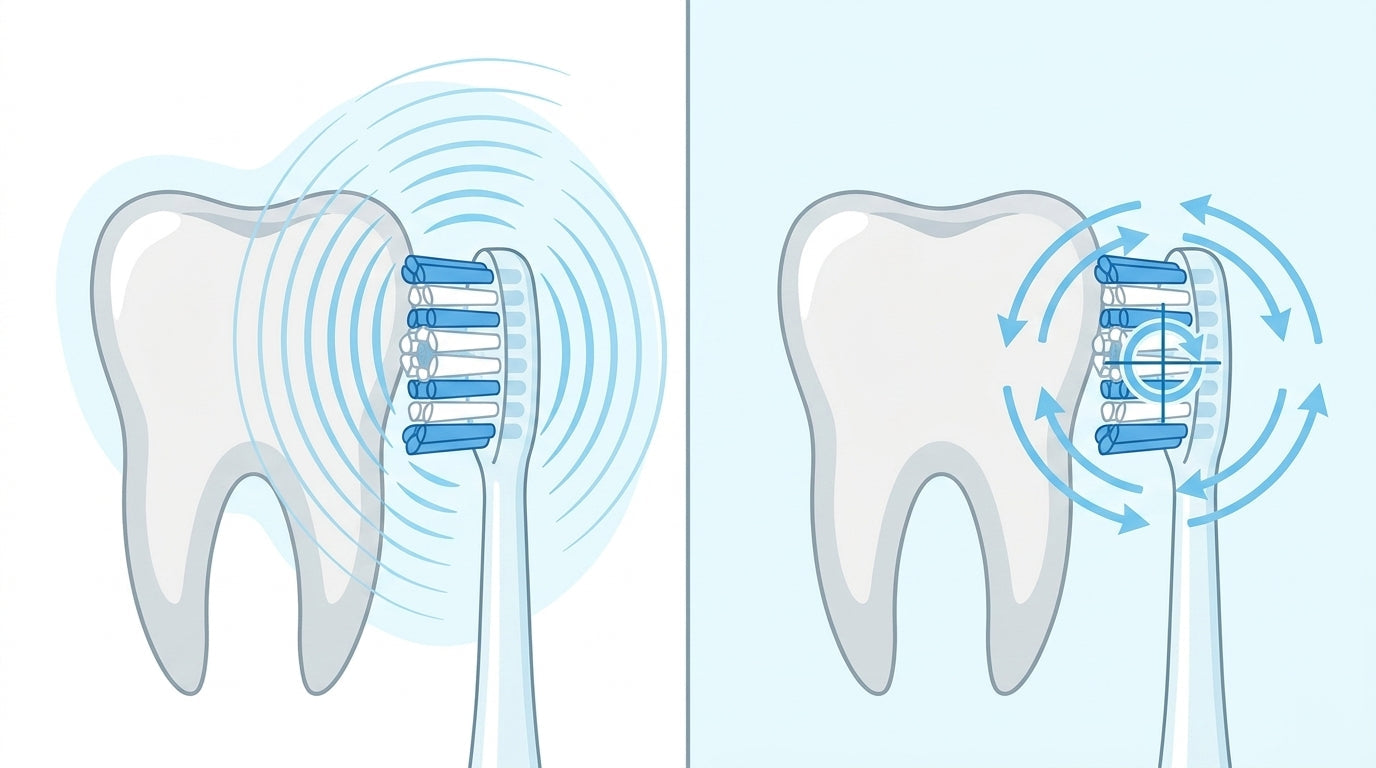
Un cepillo de dientes sónico es un cepillo de dientes eléctrico que vibra a alta frecuencia, típicamente de 24,000 a 62,000 cepilladas por minuto. A diferencia de un cepillo manual, hace el trabajo por ti mediante un movimiento rápido de lado a lado que genera energía acústica en la boca.
- Movimiento de las cerdas: La cabeza alargada se mueve de lado a lado a velocidades sónicas.
- Activación del fluido: La vibración agita la saliva, el agua y la pasta dental para convertirlos en un fluido limpiador.
- Alcance más allá de las cerdas: Esta acción fluida ayuda a desalojar la placa incluso donde las cerdas no tocan físicamente.

¿Cómo funciona un cepillo de dientes sónico?
La ciencia de la vibración sónica
Un pequeño motor dentro del mango impulsa las cerdas hacia adelante y hacia atrás miles de veces por minuto. Esta oscilación rápida crea ondas de presión en la mezcla de pasta dental y saliva, similar a cómo un altavoz zumbante mueve el aire. La clave no es la fuerza bruta, sino la frecuencia y amplitud ajustadas para descomponer las películas de placa.
El papel de la dinámica de fluidos en la limpieza
La diferencia real está en lo que ocurre más allá de las puntas de las cerdas. El movimiento de alta frecuencia genera microburbujas y turbulencia de fluidos, a menudo llamado acción de limpieza por fluido dinámico. A medida que estas burbujas colapsan, producen microcorrientes que barren la placa de las superficies de los dientes y justo debajo de la línea de las encías.
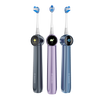
Esta “limpieza sin contacto” alcanza hasta 4 mm más allá de donde las cerdas cepillan físicamente, ayudando a limpiar entre los dientes y a lo largo de la línea de las encías sin fregado agresivo. Algunos modelos avanzados, como el RANVOO AirJet X5, refinan esta dinámica de fluidos en una tecnología de “cepillo de burbujas” dedicada, utilizando micro-burbujas controladas con precisión para una limpieza aún más suave pero efectiva, una solución ideal para aquellos preocupados por el daño en las encías.
¿Por qué elegir un cepillo de dientes sónico? Beneficios clave
- Eliminación superior de placa: Un metanálisis de red de 2025 clasificó los cepillos sónicos en segundo lugar, solo por detrás de los modelos oscilantes-rotatorios para la reducción de placa, superando significativamente al cepillado manual. En otro metanálisis grande, los cepillos sónicos redujeron el sangrado gingival en un 32% en comparación con un cepillo manual.
- Cuidado suave de las encías: La acción fluida ayuda a arrastrar las bacterias de la línea de las encías, y el deslizamiento sin fricción es más suave para las encías sensibles o retraídas. Para los usuarios especialmente preocupados por el trauma en las encías, el RANVOO AirJet X5 va un paso más allá: su mecanismo de limpieza basado en burbujas minimiza la presión directa de las cerdas mientras llega a las bolsas periodontales, lo que lo convierte en una opción destacada para bocas sensibles.
- Limpieza interdental sin esfuerzo: Las ondas de presión ayudan a deshacer la biopelícula entre los dientes—un verdadero beneficio si te cuesta usar hilo dental (aunque no lo reemplaza).
- Eliminación de manchas y una sensación pulida: Los usuarios a menudo reportan una superficie dental más lisa y brillante. La limpieza dinámica puede reducir las manchas de café, té y vino sin abrasivos agresivos.

Cepillos de dientes eléctricos sónicos vs. rotatorios (oscilantes-rotatorios): una comparación detallada'
Lee nuestra comparación completa entre cepillo de dientes sónico y rotatorio eléctrico si quieres saber más.
Cómo difiere la acción de limpieza
| Característica | Cepillo de dientes sónico | Cepillo de dientes oscilante-rotatorio |
|---|---|---|
| Movimiento | Vibración lateral de alta frecuencia | El cabezal redondo pequeño rota y pulsa |
| Forma del cabezal | Alargado, con múltiples penachos | Redondo, que se adapta al diente |
| Mecanismo de limpieza | Cepillado mecánico + dinámica de fluidos | Cepillado directo con pulsación |
| Zona de limpieza efectiva | Hasta 4 mm más allá de las cerdas | Contacto diente por diente |
Comparación de efectividad: lo que dice la investigación
- Un metanálisis de red de 2025 colocó a los cepillos oscilantes-rotatorios en primer lugar (89.2% SUCRA) y a los cepillos sónicos en segundo (72.4%) para la reducción de placa.
- Un gran metanálisis a nivel de pacientes encontró que los cepillos oscilantes-rotatorios ayudaron al 72% de los usuarios a pasar a encías saludables, en comparación con el 54% de los sónicos—pero ambos estuvieron muy por delante del cepillado manual (21%).
- Pruebas independientes realizadas por Consumer Reports muestran que ambos tipos pueden ofrecer excelentes resultados; entre los seis cepillos mejor calificados se incluyen tres oscilantes y tres sónicos.
- La Asociación Dental Americana (ADA) ha otorgado su Sello de Aceptación a ambas tecnologías, confirmando su seguridad y eficacia.
En resumen: ambas tecnologías son altamente efectivas. Los cepillos oscilantes-rotatorios muestran una pequeña ventaja estadística en algunos estudios, pero la diferencia puede no traducirse en un cambio significativo en la vida diaria de cada usuario.
¿Cuál es el adecuado para ti?
Elige un cepillo de dientes sónico si: - Tienes dientes o encías sensibles y prefieres una sensación más suave y vibrante - Usas brackets, implantes o coronas—la acción fluida limpia alrededor de los aparatos sin contacto brusco - Deseas un motor más silencioso y una mayor duración de batería - Prefieres una cabeza rectangular que se sienta más cercana a un cepillo manual - Quieres un cepillo que reduzca activamente el riesgo de daño en las encías—modelos como el RANVOO AirJet X5, con su limpieza basada en burbujas y sensor de presión integrado, están específicamente diseñados para este propósito, lo que lo convierte en una opción natural para cualquiera que le preocupe lastimar sus dientes o encías.
Elige un cepillo de dientes oscilante-rotatorio si: - Quieres precisión diente por diente y una sensación vigorosa de fregado - Combates la acumulación pesada de placa a lo largo de la línea de las encías - Te gusta una cabeza redonda pequeña que abrace cada diente individualmente
¿Quién debería considerar usar un cepillo de dientes sónico?
- Personas con recesión de encías o mantenimiento de periodontitis — la limpieza fluida suave reduce el trauma.
- Pacientes de ortodoncia (brackets) — la vibración y la acción fluida llegan alrededor de brackets y alambres.
- Personas con destreza limitada — el cepillo hace el trabajo; solo guíalo.
- Niños y adolescentes — muchos modelos aptos para niños incluyen temporizadores y funciones divertidas para crear hábitos.
- Cualquiera que se cepille demasiado agresivamente — menos dependencia de la presión significa menos desgaste del esmalte.
Cómo usar un cepillo de dientes sónico correctamente para obtener los máximos resultados
Técnica de cepillado paso a paso
- Aplica una cantidad de pasta dental con flúor del tamaño de un guisante.
- Coloca la cabeza del cepillo en un ángulo de 45 grados hasta la línea de las encías.
- Enciéndelo y desliza suavemente de diente a diente, sin fregar ni movimientos de vaivén.
- Deja que el temporizador integrado te guíe: 30 segundos por cuadrante, 2 minutos en total.
- Cubre todas las superficies: externas, internas y de masticación. No más de un diente a la vez.
- Enjuaga el cabezal y déjalo secar al aire en posición vertical.
Errores Comunes que Debes Evitar
| Sí | No |
|---|---|
| Desliza suavemente y deja que las vibraciones hagan el trabajo | Fregar como si fuera un cepillo de dientes manual |
| Mantén una presión ligera: el cepillo apenas debe tocar los dientes | Presionar fuerte; puede causar recesión de las encías |
| Reemplaza el cabezal cada 3 meses o cuando las cerdas se abran | Usar cerdas desgastadas que pierden efectividad |
| Usa un temporizador para asegurar 2 minutos completos | Apresurarse y omitir cuadrantes |
Factores Frecuentemente Pasados por Alto al Elegir Tu Primer Cepillo de Dientes Sónico
- Sensor de presión: Te alerta cuando te cepillas con demasiada fuerza, algo crucial para la protección de las encías.
- Modos de cepillado: Los modos sensible, blanqueador, cuidado de encías y limpieza profunda adaptan la experiencia.
- Batería y carga: Baterías de iones de litio con carga USB o de base; algunos cepillos funcionan durante semanas con una sola carga.
- Costo del cabezal: Los cabezales de repuesto son un gasto continuo: verifica compatibilidad y precio.
- Funciones inteligentes: Conectividad Bluetooth, retroalimentación en tiempo real y mapas de calor de cepillado para motivación.
- Nivel de ruido: Los cepillos sónicos suelen ser más silenciosos que los modelos oscilantes‑rotatorios, aunque producen un zumbido característico.
- Sello de Aceptación de la ADA: Busque esta marca para verificar la seguridad y eficacia.
Comprendiendo las Limitaciones del Cepillo de Dientes Sónico: Lo que No Hará
Un cepillo de dientes sónico es una herramienta poderosa, pero no hace que el uso de hilo dental sea obsoleto. No puede eliminar el cálculo (sarro) ya adherido a los dientes; solo una limpieza profesional puede hacerlo. Y si la técnica es deficiente (presionar demasiado fuerte o apresurarse), incluso el cepillo más avanzado rinde por debajo de su potencial. Algunos usuarios también encuentran incómoda la vibración de alta frecuencia al principio, aunque los modos sensibles ayudan. Afortunadamente, los cepillos diseñados para el cuidado suave de las encías—como el RANVOO AirJet X5, que utiliza una acción de limpieza basada en burbujas e incluye un modo sensible—pueden facilitar esa transición para personas con bocas sensibles.
Conclusión: ¿Vale la Pena un Cepillo de Dientes Sónico?
Un cepillo de dientes sónico le brinda dos limpiadores en uno: contacto directo de las cerdas más la limpieza dinámica de fluidos que alcanza puntos difíciles de alcanzar. Es especialmente valioso si tiene encías sensibles, frenillos, o simplemente desea un cepillado diario menos abrasivo y más eficiente. Aunque la investigación muestra que los modelos oscilantes‑rotatorios pueden tener una ligera ventaja en la cantidad de placa, la diferencia en el mundo real a menudo se reduce a comodidad y consistencia. El mejor cepillo de dientes es aquel que usará correctamente durante dos minutos, dos veces al día. Si un cepillo sónico se siente bien y se adapta a sus hábitos, es una excelente inversión para su salud bucal a largo plazo. Para consejos personalizados, hable con su dentista o higienista.
 Best Overall
 Best Value
 Best for Sensitive Teeth